
Wrist & Hand Pain Physiotherapy in Weybridge & Woking
Expert assessment and treatment for De Quervain's, carpal tunnel syndrome, thumb base arthritis and other wrist and hand conditions — no GP referral needed.

Your wrists and hands rarely get a moment off. They're gripping the steering wheel, typing an email, opening a jar, holding a pen, carrying the shopping and doing up buttons - often dozens of times before you've even left the house. So when pain, stiffness or numbness creeps in, it doesn't just affect one activity, it touches almost everything you do with your hands all day long.
At Trinity Physiotherapy, we take the time to identify exactly what's behind your symptoms - whether that's a tendon, a joint, a nerve or a ligament - and build a treatment plan around the tasks, hobbies or work that rely on your hands the most. Our goal is to get you back to using them without a second thought.
The wrist and hand conditions we see most often in clinic
The wrist and hand are asked to do an enormous amount of fine, repetitive work, which is exactly why problems here are so common - and exactly why we assess them as part of our wider MSK physiotherapy and sports injury service.
What's really going on when your wrist or hand hurts?
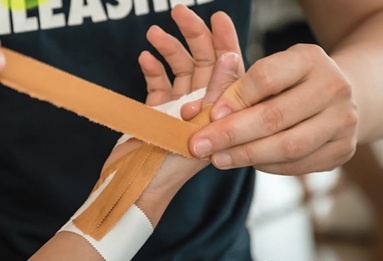
The wrist and hand pack an enormous number of small joints, tendons, nerves and ligaments into a very small space. Tendons run through narrow, well-defined tunnels to reach the thumb and fingers, nerves like the median and ulnar nerve pass through equally narrow spaces on their way to the hand, and the joint at the base of the thumb is put under disproportionate strain every time you grip or pinch something.
During your assessment, we work out precisely which of those structures is behind your symptoms, rather than treating "wrist pain" or "hand pain" as one single problem.
Your symptoms may be influenced by factors such as:
- Repetitive gripping, typing, lifting or twisting at work, in the gym or with hobbies
- A fall onto an outstretched hand, or a direct blow to the wrist or fingers
- A sudden increase in load after a period of doing less
- Inflammatory or degenerative changes within the joints themselves
With so many different structures packed into such a small area, an accurate diagnosis changes everything about the plan we build with you - which is why we look beyond the label you arrive with.
How can physiotherapy help with wrist and hand pain?
Your hands need to be precise as well as strong, so treatment has to be just as targeted - built around exactly what's going on beneath the surface, not a one-size-fits-all exercise sheet.
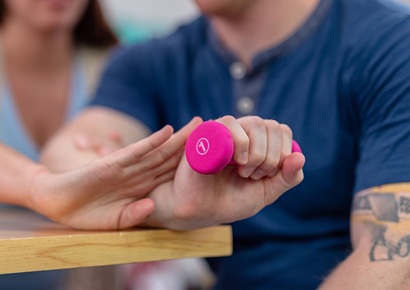
Once we've confirmed your diagnosis, our aim is straightforward: ease your pain, restore full movement through the wrist and hand, rebuild the grip and strength behind everyday tasks, and help stop the problem coming back.
What might your treatment involve?
Once we've completed your assessment, we'll put together a combination of treatments suited to your wrist or hand, which may include:
- Manual therapy: hands-on mobilisation of the wrist and hand joints to ease stiffness and improve how well they move.
- Targeted strengthening exercises: to rebuild grip strength and support the tendons and muscles around the wrist and hand, paced to what your symptoms can handle.
- Stretching and mobility work: for the wrist, hand and fingers, to restore flexibility and full range of movement.
- Splinting and taping advice: to offload an aggravated tendon or joint during flare-ups while keeping the rest of your hand moving.
- Postural and ergonomic advice: practical changes to your desk set-up, grip or technique, to take strain off the area while it recovers.
- Nerve mobilisation techniques: where a trapped or irritated nerve, such as in carpal tunnel syndrome, is contributing to your symptoms.
- Acupuncture: used selectively alongside your exercise programme to help take the edge off persistent pain.
Whatever's brought you in, the plan we build with you goes beyond settling today's pain - it's there to help you understand what's going on, get your hand working properly again, and reduce the chances of it flaring up in future.
Wrist & Hand Pain FAQs
What's the difference between carpal tunnel syndrome and De Quervain's tenosynovitis?
They affect different structures at the wrist. Carpal tunnel syndrome is compression of the median nerve as it passes through the wrist, typically causing pins and needles or numbness in the thumb, index and middle fingers, often worse at night. De Quervain's tenosynovitis is irritation of the tendons on the thumb side of the wrist, causing pain with gripping, twisting or lifting, without the numbness. We'll assess which is driving your symptoms before starting treatment.
Will exercise make my tendon pain worse?
It's a common concern, but tendons generally need the right amount of controlled movement to settle down and recover, not complete rest. We'll pace your exercises to a level your symptoms can tolerate, building up gradually rather than avoiding movement altogether.
I have pain and stiffness at the base of my thumb — is that arthritis?
It's possible - the joint at the base of the thumb (the CMC joint) is one of the most common sites for osteoarthritis in the hand, especially with repeated gripping and pinching. We can confirm this on assessment and put together a plan combining splinting, joint protection advice and targeted exercise. If we feel further investigation or an injection is required, we can refer you to the right specialist for that.
I've had a wrist or hand fracture, or dislocated my thumb — when can physiotherapy start?
Often sooner than people expect. Once your fracture clinic or surgeon has confirmed the area is stable enough to move, we begin gently restoring movement before building strength back up, following the staged plan agreed with your treating team.
Can physiotherapy help with rheumatoid arthritis in my hands?
Yes. Alongside your rheumatology team's management of the condition itself, we can help maintain movement and grip strength, manage flare-ups and adjust your exercise programme as your symptoms change - working closely with our rheumatology physiotherapy service where helpful.
Do I need a referral to see a physiotherapist for wrist or hand pain?
No, you can book directly with Trinity Physiotherapy without a referral from your GP or consultant. If we feel you need further medical input or imaging, we'll point you in the right direction.
Lending a hand to your recovery
Whether it's De Quervain's or carpal tunnel that won't settle, thumb base arthritis, a sprain, a fracture or a trigger finger catching every time you bend it, our team is here to help with an accurate diagnosis and a plan built around you. No GP referral needed — most patients are seen within days.