
Shoulder Pain Physiotherapy in Weybridge & Woking
Expert assessment and treatment for shoulder pain, stiffness and instability — no GP referral needed.

Struggling to reach a top shelf, dreading the moment you roll onto that side in bed, or wincing every time you reach for a seatbelt - shoulder pain has a way of turning up in life's smallest, most repeated movements. The shoulder trades stability for range of motion more than any other joint in the body, which is exactly why it's prone to problems, and why working out what's actually wrong isn't always straightforward.
At Trinity Physiotherapy, we build your treatment plan around the activities, sport or work that matter to you, not a generic exercise sheet. Whether that's swimming, gardening, weight training or simply getting dressed without wincing, we take the time to understand how you use your shoulder day to day, so you get a plan that fits your life and gets you back to using it without holding back.
We help people with a wide range of shoulder problems
The shoulder is one of the joints we treat most often, precisely because it's asked to do so much - from overhead sport to simply lifting a kettle - as part of our MSK physiotherapy and sports injury service.
Why does my shoulder hurt?

Unlike the hip, the shoulder isn't a deep, well-contained ball-and-socket joint - it's a shallow socket held together largely by muscles, tendons and ligaments. That's what gives you the enormous range of movement needed to throw, reach overhead or scratch your own back, but it also means the surrounding soft tissue, particularly the rotator cuff, takes on a disproportionate amount of the workload, and is usually where problems start.
During your assessment, we look at how your shoulder blade, upper back and rotator cuff are working together, not just the point where you feel pain. A shoulder that hurts at the front might be compensating for weakness or stiffness somewhere else entirely, which is why treating the site of pain in isolation doesn't always solve the problem.
Your symptoms may be influenced by factors such as:
- A sudden fall, wrench or dislocation
- Repetitive overhead activity at work, in the gym or in sport
- Weakness or poor control around the shoulder blade
- Age-related changes to the rotator cuff or joint surfaces
Because so many different structures sit within such a small space, getting the diagnosis right changes everything about what we do next - which is why we rarely treat "shoulder pain" as a single, generic condition.
How can physiotherapy help with shoulder pain?
Getting a shoulder moving freely again is rarely about one exercise or one technique - it's about combining the right hands-on care with structured, progressive loading.
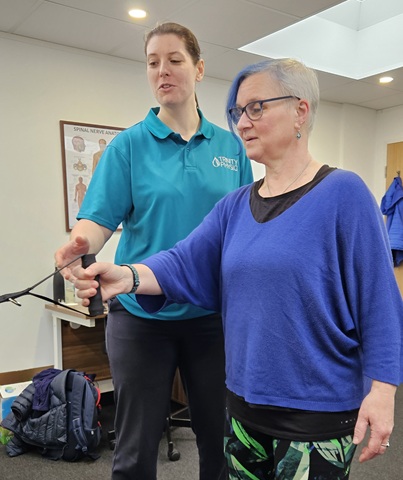
Once we've confirmed what's driving your symptoms, our aim is straightforward: ease your pain, restore full movement through the shoulder blade and joint, rebuild the strength and control that support it, and reduce the risk of it happening again.
What might your treatment involve?
Once we've completed your assessment, we'll put together a combination of treatments suited to your shoulder, which may include:
- Manual and soft tissue therapy: hands-on techniques to ease pain and restriction, particularly useful in the early, more painful stages.
- Progressive strengthening exercises: for the rotator cuff and shoulder blade muscles, built up in stages as your shoulder tolerates load.
- Scapular and movement retraining: to correct the way your shoulder blade and upper back are working with your shoulder.
- Stretching and mobility work: particularly important for frozen shoulder, to preserve as much range of movement as possible through each phase.
- Guidance on activity and pacing: to help you stay moving without flaring symptoms, especially through the frozen shoulder timeline.
- Staged post-surgical rehabilitation: following your surgeon's protocol after a repair or fracture, from early protection through to full strength.
- Acupuncture: used selectively alongside your exercise programme to help take the edge off persistent pain.
Wherever you're starting from, the plan we build with you is about more than settling today's pain - it's there to get your shoulder moving with confidence again, whether that's overhead in the gym or simply reaching for a top shelf without wincing.
Shoulder Pain FAQs
Should I rest or keep moving with shoulder pain?
In most cases, keeping the shoulder moving within a comfortable range is more helpful than resting it completely, which can lead to stiffness on top of the original problem. We'll guide you on which movements to prioritise and which to avoid early on.
Is exercise safe for rotator cuff pain, or could I make it worse?
Yes - and it's usually the most effective treatment we have. The key is loading the tendon at the right level for where you are, which is why a generic exercise sheet often falls short and a tailored programme works better.
What is frozen shoulder, and how long does it take to get better?
Frozen shoulder is a gradual loss of shoulder movement that typically passes through a painful freezing stage, a stiffer frozen stage, and a slow thawing stage as movement returns. It can take anywhere from several months to a couple of years, and physiotherapy can help manage pain and preserve movement throughout.
I've been told I have a rotator cuff tear — do I need surgery?
Not necessarily. Many rotator cuff tears, including some full-thickness tears, cause little or no pain and improve well with structured rehabilitation. Surgery tends to be considered when symptoms don't settle with physiotherapy or when the tear is significant and recent.
I dislocated my shoulder — will it happen again, and can physio help?
The risk of a repeat dislocation depends on factors like your age and activity level, but a structured strengthening and control programme meaningfully reduces that risk. We'll build a plan around your shoulder's stability and your return to the activities you care about.
Do I need a referral for shoulder pain physiotherapy?
No. You can book directly with Trinity Physiotherapy without a GP or consultant referral. If we feel further medical assessment or imaging is needed, we will guide you appropriately.
Put shoulder pain behind you
Whether it's a rotator cuff that's been niggling for months, a frozen shoulder testing your patience, or the aftermath of a dislocation or surgery, our team is here to help with expert assessment and a plan built around you. No GP referral needed — most patients are seen within days.