
Elbow Pain Physiotherapy in Weybridge & Woking
Expert assessment and treatment for tennis elbow, golfer's elbow and other elbow conditions — no GP referral needed.
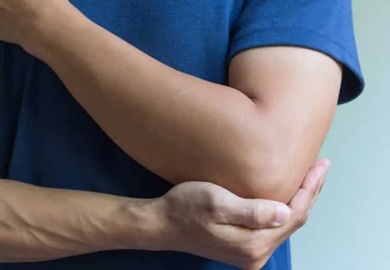
A stiff, sharp or aching elbow rarely stays out of the way. It's there every time you turn a door handle, lift a kettle, shake a hand, push up out of a chair or take a racket back - because the elbow sits right in the middle of almost every task your arm does, hinging and rotating to let your hand do its job. When it stops cooperating, even small everyday movements start to feel like hard work.
At Trinity Physiotherapy, we build your treatment plan around the activities, sport or work that matter to you, not a generic exercise sheet. Our physiotherapists take the time to get to know your elbow, your goals and your day-to-day demands, so you get a plan that fits your life and gets your arm back to doing its job without you thinking twice about it.
The elbow conditions we see most often in clinic
Because the elbow links the shoulder to a wrist and hand that are usually doing the fine, repetitive work, problems here are rarely caused in isolation - which is exactly why we assess it as part of our wider MSK physiotherapy and sports injury service.
What's really going on when your elbow hurts?

The elbow does two jobs at once - it hinges to bend and straighten the arm, and it rotates to turn your palm up and down, a movement called pronation and supination. That combination means the tendons anchoring onto the bony points either side of the joint, the joint surfaces themselves, and the ulnar nerve running along the inside all take a share of the load, often at the same time.
During your assessment, we work out precisely which of those structures is behind your symptoms, rather than treating "elbow pain" as one single problem.
Your symptoms may be influenced by factors such as:
- Repetitive gripping, twisting or lifting at work, in the gym or on the court or course
- A fall onto an outstretched hand, or a direct blow to the joint
- A sudden increase in load after a period of doing less
- Inflammatory or degenerative changes within the joint itself
With so many different structures packed into a small joint, an accurate diagnosis changes everything about the plan we build with you - which is why we look beyond the label you arrive with.
How can physiotherapy help with elbow pain?
Physiotherapy is one of the most effective ways to get on top of elbow pain and deal with what's actually causing it, whatever that turns out to be.
Reviewed by a HCPC-registered Physiotherapist · Last updated August 2026
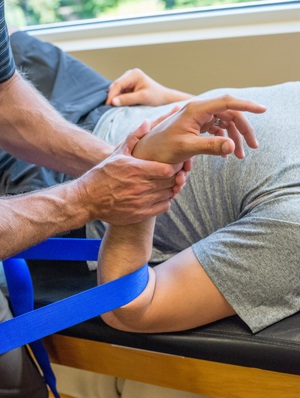
Once we've confirmed your diagnosis, our aim is straightforward: ease your pain, restore full movement through the joint, build back the strength that supports it, and leave you with the tools to stop it coming back.
What might your treatment involve?
Once we've completed your assessment, we'll put together a combination of treatments suited to your elbow, which may include:
- Manual therapy: hands-on techniques to ease muscle tension, settle stiffness and improve how well the joint moves.
- Targeted strengthening exercises: to build resilience in the tendons and muscles supporting your elbow, paced to what your symptoms can handle.
- Stretching and mobility work: for the elbow and forearm, to restore flexibility and full range of movement.
- Postural and ergonomic advice: practical changes to how you're gripping, lifting or sitting at a desk, to take strain off the joint while it recovers.
- Guidance on heat and cold: to help settle pain and swelling in the early stages.
- Acupuncture: used selectively alongside your exercise programme to help take the edge off persistent pain.
- Nerve mobilisation techniques: where a trapped or irritated nerve, such as in cubital tunnel syndrome, is contributing to your symptoms.
Whatever's brought you in, the plan we build with you is designed to do more than settle today's pain - it's there to help you understand your elbow, build it back up properly, and reduce the chances of the same problem returning.
Elbow Pain FAQs
What's the difference between tennis elbow and golfer's elbow?
They're mirror images of each other. Tennis elbow (lateral epicondylopathy) affects the tendons on the outside of the elbow that extend the wrist and fingers, while golfer's elbow (medial epicondylopathy) affects the tendons on the inside that flex the wrist. Despite the names, both are far more often caused by repetitive gripping or lifting at work or in the gym than by racket sports or golf.
Will exercise make my tendon pain worse?
It's a common worry, but the opposite is usually true. Tendons need a controlled amount of load to recover, and cutting out all gripping or lifting tends to leave the problem lingering. We build your loading programme up gradually so you're working the tendon hard enough to help it adapt, without flaring it up.
I have pins and needles down to my ring and little finger — is that coming from my elbow?
It's possible. The ulnar nerve passes through a narrow tunnel on the inside of the elbow, and irritation there (cubital tunnel syndrome) commonly refers pins and needles or numbness into the ring and little fingers. We'll assess the neck, shoulder and nerve alongside the joint to confirm where the problem is coming from.
I've had an elbow fracture or dislocation — when can physiotherapy start?
Often sooner than people expect. Once your surgeon or fracture clinic has confirmed the joint is stable enough to move, we begin gently restoring range of movement before progressing to strength work, following the staged protocol agreed with your treating team.
Can physiotherapy help if I have rheumatoid arthritis in my elbow?
Yes. Alongside your rheumatology team's management of the underlying condition, we can help maintain movement and strength around the joint, manage flare-ups and adapt your exercise programme as your symptoms change — working closely with our rheumatology physiotherapy service where helpful.
Do I need a referral to see a physiotherapist for elbow pain?
No, you can book directly with Trinity Physiotherapy without a referral from your GP or consultant. If your presentation suggests you need further medical input or imaging, we'll let you know and point you in the right direction.
Ready to give your elbow pain the elbow?
Whether it's tennis or golfer's elbow that won't settle, a nerve that keeps tingling, arthritis flaring up, or recovery from a fracture, dislocation or surgery, our team is here to help with an accurate diagnosis and a plan built around you. No GP referral needed — most patients are seen within days.