
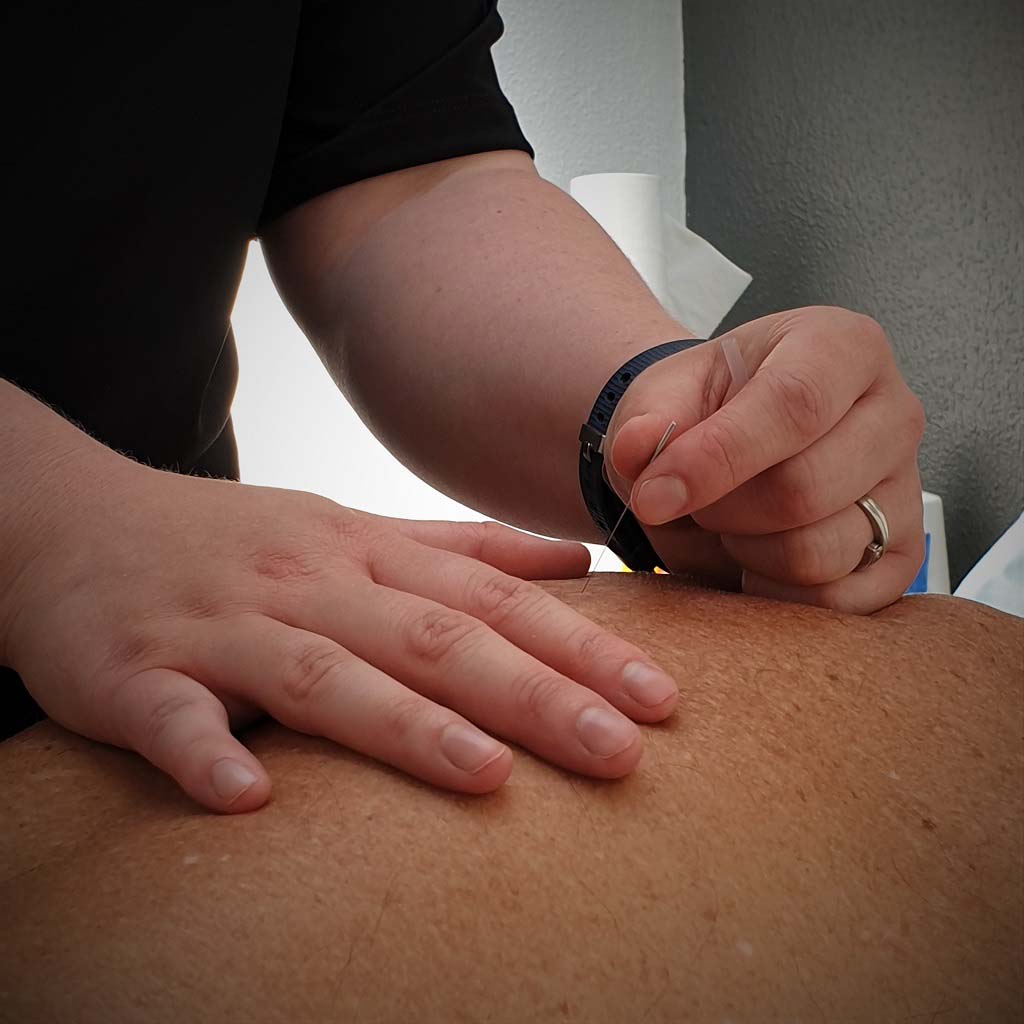
Getting to the Point of Your Pain: Medical Acupuncture in Weybridge & Woking
Medical (Western) acupuncture can be used alongside physiotherapy to help reduce pain, ease muscle tension and support your recovery.
At Trinity Physiotherapy, acupuncture is never used in isolation. It forms part of a wider treatment plan that may also include hands-on therapy, exercise, movement advice and rehabilitation tailored to your goals.
Ancient Origins. Modern Understanding.
Acupuncture has been used in Eastern medicine for thousands of years. Today, Western medical research helps us understand some of the physiological effects that may explain how acupuncture can support pain relief, healing and rehabilitation.
Local Effects
Acupuncture may stimulate a local response in the tissues, helping to increase blood flow and encourage the release of natural chemicals involved in healing and inflammation control.
Muscle Effects
Acupuncture can help reduce muscle tension and ease protective muscle guarding, allowing tight or painful areas to feel more relaxed and comfortable.
Nervous System Effects
Acupuncture is thought to stimulate the release of the body's natural pain-relieving chemicals, including endorphins and endogenous opioids, and may help regulate how pain signals are processed.
What to Expect From Acupuncture Treatment
Acupuncture is one part of your physiotherapy appointment. Here is what usually happens.
Assessment and Screening
Your physiotherapist takes a full history, examines the painful area and how you move, and asks about your general health and medication. Acupuncture only goes ahead if it is suitable for you and you are happy to proceed.
Treatment
Fine, sterile, single-use needles are placed at carefully chosen points, often in or near the painful area. Most people feel little more than a mild pinch, followed by a dull ache, warmth or heaviness. The needles are usually left in place for a short time while you rest.
Review and Next Steps
We check how you feel afterwards and combine acupuncture with hands-on treatment, exercise and advice. We review your response as we go, so acupuncture continues only while it is helping you.
Why Choose Trinity Physiotherapy for Acupuncture?
Acupuncture within physiotherapy is not a standalone treatment. It is one of several options that may help calm pain, improve comfort and create the opportunity to move more freely.
- Clinicians are members of the Acupuncture Association of Chartered Physiotherapists, the recognised professional body for acupuncture in physiotherapy.
- Over 10 years' experience in performing western medical acupuncture
- Expert treatment plans combining acupuncture with physiotherapy, exercise and rehabilitation
- Support for acute injuries, persistent pain, joint pain and muscle tension
- Sterile, single-use needles and careful screening before treatment
- A calm, personalised approach focused on helping you move with confidence
Is Acupuncture Right For You?
Acupuncture delivered by trained physiotherapists is generally very safe, and every patient is screened before treatment. The most common side effects are mild and short-lived, such as bruising, soreness, tiredness or a temporary flare-up of your usual symptoms. Serious side effects are rare.
Acupuncture is not suitable for everyone, and it is not the right answer for every problem. If it is not the best option for you, we will explain why and talk through the alternatives.
Please tell us before treatment if you:
- Take blood-thinning medication or have a bleeding disorder
- Are pregnant, or think you might be
- Have a pacemaker or other implanted electrical device
- Have an infection, a skin condition in the area, or a weakened immune system
- Have a history of fainting, or feel anxious about needles
This is not a list of reasons you cannot have acupuncture. In many cases we can still treat you, with adjustments.
Acupuncture FAQs
What is medical (Western) acupuncture?
Medical acupuncture is the use of fine needles, informed by modern anatomy, physiology and pain science, to influence how the body processes pain and to ease muscle tension.
Unlike traditional Chinese acupuncture, treatment is based on a physiotherapy assessment of your symptoms rather than traditional energy pathways. Our clinicians are members of the Acupuncture Association of Chartered Physiotherapists.
Does acupuncture hurt?
Most people feel very little as the needle goes in, often a brief pinch or nothing at all. Once the needle is in place you may notice a dull ache, warmth, tingling or heaviness around it. This is normal and usually settles quickly.
If anything feels uncomfortable, tell us and we will adjust or remove the needle.
What conditions can acupuncture help with?
Acupuncture is most often used as part of physiotherapy for musculoskeletal pain such as back pain and sciatica, neck pain and headaches, shoulder pain, tennis and golfer's elbow, muscle tension and persistent pain.
Research suggests it may help some people with these problems, although responses vary from person to person. It is not a cure. We use it to reduce pain and make it easier to move and get on with your rehabilitation.
Is acupuncture used on its own?
No. At Trinity Physiotherapy, acupuncture is always part of a wider treatment plan. It may be combined with hands-on therapy, exercise, movement advice and rehabilitation, depending on what will help you most. Read more about our physiotherapy and sports injury management.
How many acupuncture sessions will I need?
It varies depending on your problem, how long you have had it and how you respond. We normally review how you are responding after your first few sessions and agree the next steps with you.
If acupuncture is not helping, we will change the plan rather than continue for the sake of it.
Is acupuncture safe?
Acupuncture delivered by trained physiotherapists is generally very safe. We use sterile, single-use needles and screen every patient before treatment.
The most common side effects are mild and short-lived, such as bruising, soreness, tiredness or a temporary flare-up of your usual symptoms. Serious side effects are rare.
Who should not have acupuncture, or needs extra care?
Some people need extra care or a different approach, including people taking blood-thinning medication or with a bleeding disorder, people who are pregnant, people with a pacemaker or other implanted electrical device, and anyone with an infection or a weakened immune system.
Please tell us about your health and medication before treatment. In many cases we can still treat with adjustments, and we will always talk through the alternatives.
Do I need a GP referral for acupuncture?
No. You can book directly with us in Weybridge or Woking. If we think you need medical investigation or a different type of care, we will tell you.
How should I prepare for acupuncture and what happens afterwards?
Eat normally beforehand, wear loose clothing that lets us reach the area being treated, and bring a list of any medication you take.
Afterwards most people carry on as normal, although some feel relaxed or tired for a while. If you feel drowsy or light-headed, take a few minutes before driving.
Book Your Acupuncture Appointment
Whether you are dealing with a new injury, muscle tension or pain that has lingered, we will assess you first and only use acupuncture if it is right for you, alongside the treatment and exercise that will help you move better.
Appointments are available in Weybridge & Woking. No GP referral needed.